Showing posts with label Write Club. Show all posts

Monday, October 28, 2013

What makes a Masterpiece?

The results are in and this year's WRiTE Club champion is Tex Thompson a.k.a. Muleshoe. Many congratulations to Tex for giving us such inspiring writing and to Jane Lebak (Philangelus), our honored runner-up for her well-crafted entries as well. An extra special thanks, of course, goes to Don Hammons and his wife, Kim, for their great work in putting the competition together...a brilliant job running a brilliant competition that lit a brilliant fire under many a sluggish butt.

This year, my super-cool wife, Faith, and I were lucky to be on the other side of the judges' table, which gave us a completely different view of the competition. It was a tremendous honor and an incredibly helpful one, too. It is always an interesting thing to see a large number of writing samples all at once.

If I had to pinpoint the most dramatic thing I learned, it was this:

Decent writing doesn't cut it.
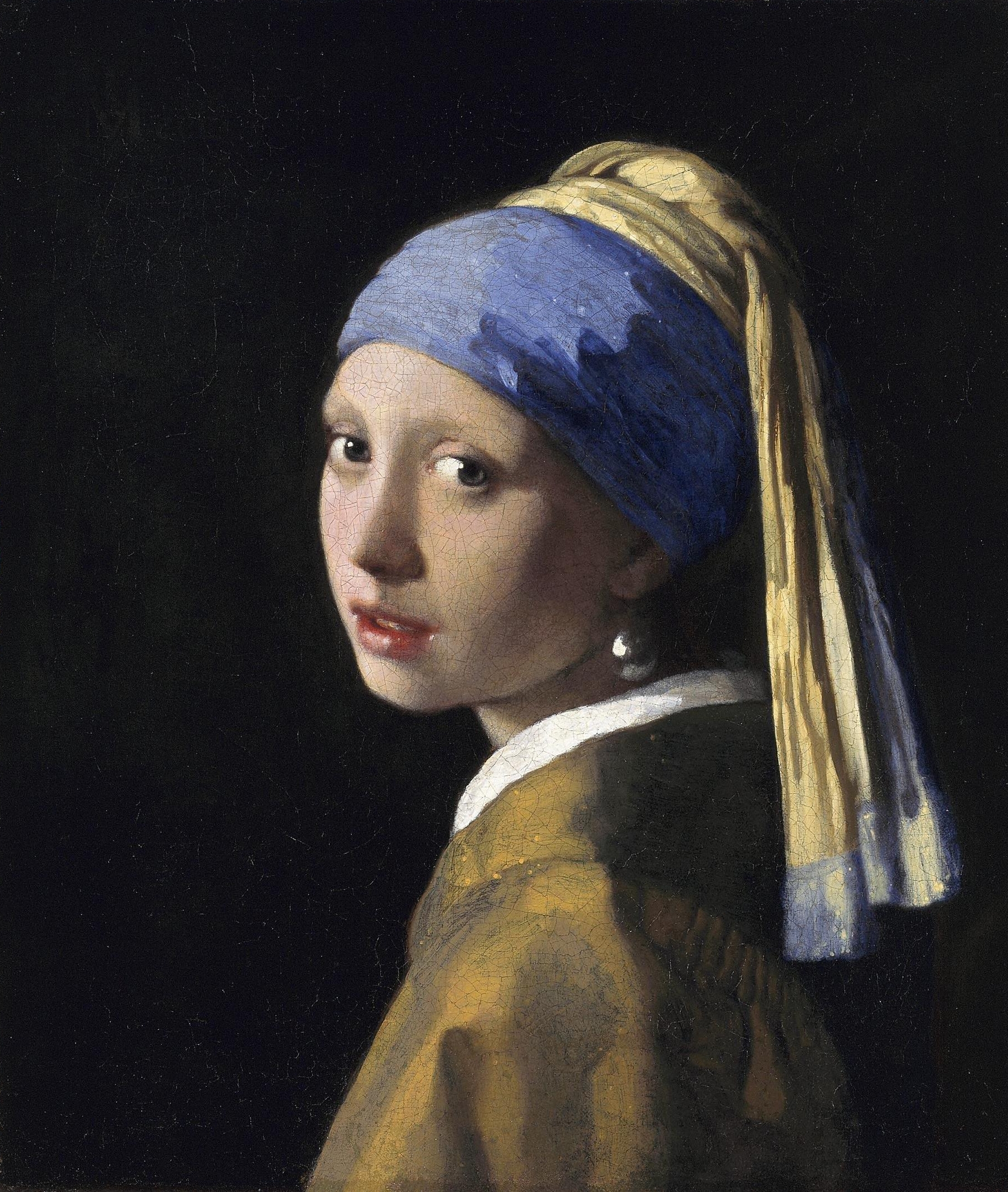
Vermeer, Girl with a Pearl Earring (Great, not decent.)

Now, this idea may seem like nothing new.... I'm sure I've heard it at least once at every conference I've been to, before tidily packing it away with all the other info I heard into neat little boxes I meant to open at a later date. After judging a large number of writing entries, it's become pretty clear that the entries that really stood out (ahem...Muleshoe's...) seemed to be of a different level completely. Now it wasn't that the other entries were bad--far from it. It was simply that the overwhelming majority of entries were decent.

And there's a problem with decent writing...especially when it is sitting snug in a slush pile. It's the same problem that occurs when you go wandering through the Metropolitan Museum of Art or any other large art museum. At first, your eye is grabbed by every well-executed piece of art, but as more and more good works are noticed, you end up with a sort of art fatigue; the paintings all blend into one and it takes a real Masterpiece to break the cycle. As a result, a room full of "decent" beautiful works can go completely unnoticed.
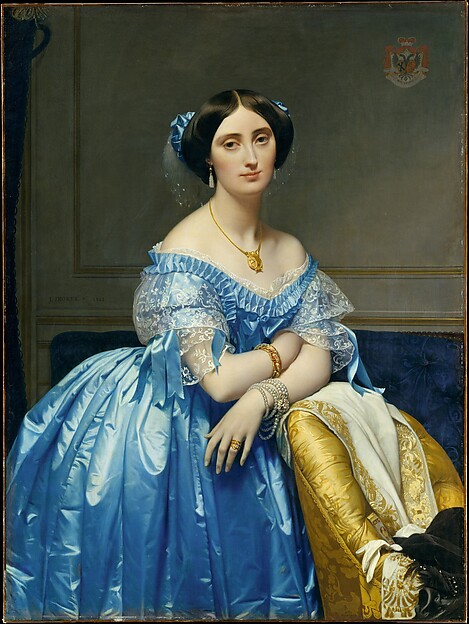
Ingres: Portrait of the Princesse de Broglie ("Go ahead, try and overlook me.")

And I don't want my writing to go unnoticed.

Besides obvious good craftsmanship, the thing that makes me stop and stare at a gorgeous painting, or a great writing excerpt like Muleshoe's, is confidence. There's a combination of boldness and subtlety in the work that makes you forget, for a brief moment, that you're taking in the invention of someone else's mind. It feels real. It literally captivates you, and won't be dismissed or overlooked.

And who doesn't want to be captivated?

Bouguereau: Two Gypies. (No caption needed, actually.)

I realize this is over-simplified... I'll be trying, over the next few weeks, to devote a series of blog posts to this general topic; to examining in more detail what makes me see certain pieces of literary art as confident, captivating masterpieces.

Thursday, December 13, 2012

Writing for Write Club

Since the Write Club finale I've had a few people ask for a little background to the entries I sent in. I finally found some time to give you just that.

So first off, we have THE PIG WOMAN.

This Winifred Wootz passage came from my current work in progress, called The Spellwriter. I've been working on the book for a number of years now. The passage I submitted comes from the first chapter, titled as follows:


Chapter One

The Cursed Boy of Bickern Major

In which
Winifred Wootz has an encounter
with a celestial light socket and the baby
gets blamed.

“If a child reaches ten
with naught but good befalling, then
he need not fear the hand of Fate
who’ll find Its curse was cast too late.”
                                                                                      -old Bickern saying


J. W. Waterhouse, Magic Circle
The Spellwriter is an upper MG fantasy about twelve-year-old Jonathan Smyth, who finds himself in the rather uncomfortable position of being apprenticed to a Hag. Winifred Wootz's role in the story is, alas, rather short, as the chapter title suggests, but she really is the one that gets the whole ball rolling, so she is necessary.

I began the story about six years ago--well before I did any real studying of the art of writing. At that point the only knowledge I had about storytelling was from the stories I read--a good start for any writer. Over time though, I learned--as every writer before me has-- that writing isn't just putting a story on paper, but telling the story in a way that works. It is always a bit frustrating to talk to people who have never tried to write professionally but who think "Gee, writing isn't that hard--after all, we all use words to speak so anyone really can do it."

I must admit, when I first started writing I had a little of that feeling. So over time I started studying really great books--you know the type, the ones that have you debating exactly how many hours of sleep the human body really does need to perform an entire day's work the following morning? Yes, those books.  

Well it got me thinking: Why do so many people agree that those books are soooo engrossing? There must be some formula they follow in the telling of a story that I and so many others miss.

Well there is...and the formula is called:

Good Writing.

That's it. The difference between okay writing and unplug-the-phone-and-eat ice-cream-from-the-carton-for-dinner-because-I-am-not-putting-this-book-down type writing is the amount of work the authors are willing to put into designing an intriguing story. Much of what goes into an intriguing story I learned from the famed Highlights Conference for Childrens Book Authors in Chautauqua, NY. It was a priceless experience.

So now I'm in my major rewrite of the story and my goal is to have it out with agents by the end of next year.

Caravaggio, Nativity
My second and third entries came from a YA sort-of-paranormal mystery that I began writing three years ago. The timing of the book was unfortunate as I began it just before the whole angels craze in the market, so I set it aside for the time being until the market cools. The story is about a fifteen-year-old girl whose father is on trial for stealing a priceless Caravaggio. She gets some unlooked-for help from a tweed-bedecked stranger named Godfrey and his fellow Earthbounds--Angels who have been demoted for one thing or another and must carry out their various angelic missions undercover as janitors, taxi cab drivers, meter maids, etc.        

The competition entries were from the first chapter, in which Mr. Jaspers and another Earthbound are caught off-guard and removed from their posts by a mysterious stranger named Mr. Dunaway. 

Now it feels funny to say the chapter "came from a manuscript" as though I just copied and pasted a passage of polished work and left it at that. As my wife can attest, that is far from the truth. I spent probably about six hours of cutting, rewriting, and wordsmithing on each entry to get it to feel complete within the 500 word limit. It was not easy. But it was an invaluable lesson in revising. I honestly feel in two of the three entries, that the passages were improved by reducing the word count. It also reminded me as a writer that I'm in control of my story and not the other way around. I think too often writers treat previously decided plot points and words they've already written as though they are a vital organ which if removed will destroy the whole story. The heart of your story is an idea...not a series of of words or actions, and that idea can be told in a million different ways; sometimes it will require 30,000 words and sometimes you can fit it into 500. It's all up to you.

So, that's the background behind the entries. In the near future I'm hoping to post the entire Chapter One of The Spellwriter for your enjoyment, but now...

BACK TO WRITING!!!